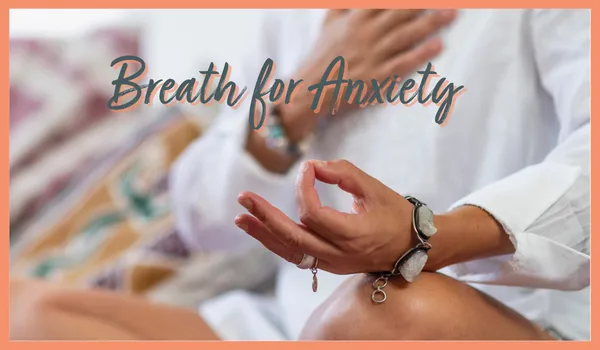
Breath for Anxiety
Welcome to March, a time dedicated to recognizing the strength, resilience, and impact of women across generations 💜. Inspired by this year’s International Women’s Day theme, “Give to Gain,” we’re turning our attention toward an often-overlooked truth: caring for others begins with caring for ourselves.
This month’s blog series will focus on anxiety, exploring how we can learn to give inwardly as much as we give outwardly. As we continue striving, supporting, and loving those around us, we’ll also consider how self-regulation and self-love allow us to show up with deeper regulation, healing, and sustainable wellbeing.
Anxiety doesn’t always begin in the mind.
Often, it begins in the body… more specifically it can be heightened by the way we breathe.
If you’re like me, then you might assume that anxious thoughts create anxious feelings; however, modern nervous system research shows something powerful:
Your breathing pattern can actually create anxiety… even when nothing is wrong.
HOW, you might be thinking??
Your breath is constantly sending messages to your brain about whether you are safe or under threat. Each inhale and exhale communicates with your nervous system, influencing heart rate, muscle tension, and stress hormone release. When your breathing is fast, shallow, or irregular, the brain interprets this as a signal that something may be wrong… even if no real danger is present. When your breath is slow, steady, and rhythmic, it tells your body that it is safe to soften, settle, and conserve energy.
Check out the five signs below that explain how your breath may be unintentionally fueling anxiety.
1. Tight Upper Chest Breathing
Take a moment right now and breathe in deeply…
Where did you notice your inhale went?
If your shoulders and upper chest lifted instead of your ribs and belly expanding, you may be stuck in shallow or upper chest breathing.
Upper chest breathing signals urgency to your nervous system. It tells your brain:
Stay alert. Something might be wrong.
Over time, if this is the natural state of how you breathe, it keeps your body in a low-grade state of fight-or-flight.
Breath Pattern Reset:
Rib Cage Breathing is a great breath pattern that will engage your diaphragm and assist your body in understanding what it feels like to take a deep breath.
Sit comfortably… spine nice and long.
Place your upper arms against the side of your rib cage.
Place your hands, palms up, on your thighs.
As you inhale, fill your lungs and allow your ribs to expand out to the sides.
As you exhale, allow your rib cage to fall back towards the midline.
Your upper arms should be moving out and then back in with the rhythm of your breath.
As you inhale out to the sides, ensure that your breath reaches your armpits, filling them up nice and full as your intercostal muscles are really tight in this area.
Something to pay attention to as your rib cage moves out to the sides… don’t allow your upper shoulders to lift. They are going to want to… so do your best to keep them down while expanding out to the side.
2. Frequent Sighs or Yawns
Many people think sighing means relaxation… and it can be if it’s intentional. However, if you have ever found yourself needing to sigh or yawn numerous times in a short period of time, this could be your body attempting to reset its dysregulated nervous system by trying to correct an imbalance in oxygen and carbon dioxide levels caused by over-breathing.
Common experiences include:
Random deep breaths.
Feeling unable to get a satisfying breath.
Air hunger, or your body’s perceived lack of oxygen.
These sensations can feel alarming, but they are often breathing pattern issues and not dangerous.
Breath Pattern Reset:
Box Breathing is a great breath pattern to help you intentionally slow down your breath and allow your nervous system to reset and calm.
Sit or lay comfortable… spine nice and long.
Close your eyes (optional).
Inhale 1, 2, 3, 4
Hold 1, 2, 3, 4
Exhale 1, 2, 3, 4
Hold 1, 2, 3, 4
Repeat the sequence at least 5 times, more if necessary.
3. Your Anxiety Appears “Out of Nowhere”
If anxiety seems to arrive without a clear emotional trigger, your breathing may already be preparing your body for danger.
Fast or shallow breathing lowers carbon dioxide levels, which can cause:
racing thoughts
dizziness
tension
heart palpitations
heightened alertness
Your brain then searches for a reason to explain the sensation — and labels it anxiety.
Breath Pattern Reset:
5 Senses Breathing is a powerful way to use your breath to engage your senses and calm your nervous system.
Stand, sit or lay comfortably… spine nice and long.
Slowly inhale through your nose.
Notice five things you can see
Focusing on their colors, shapes, and textures.
Close your eyes and take another slow inhale through your nose.
Listen for four distinct sounds
Identifying what you are hearing and where the sound is coming from
Continue to inhale slowly through your nose.
Identify three things you can feel with your body
Paying attention to the temperature and texture of what you are feeling
Now notice two things you can smell
Inhaling slowly and deeply to enhance the experience.
One more slow inhale.
Focus on one thing you can taste
Whether it's a lingering taste or something you're currently eating or drinking.
This practice helps calm your nervous system and manage anxiety by bringing your awareness to “right-here-right-now” and away from racing thoughts.
4. You Hold Your Breath Without Realizing
Many people unknowingly pause their breath while going about their day with tasks such as:
driving
scrolling on their phone
checking emails
This is called unconscious breath holding. Another time during which we all hold our breath is while moving (walking, standing up, etc) when we’re in physical pain… yup! Every. Single. Time.
Each pause sends a subtle stress signal to the nervous system, reinforcing tension throughout the day.
Breath Pattern Reset:
Belly Breathing or Diaphragmatic Breathing is a gentle breathing technique that can induce presence and calm.
Sit or lay comfortably… spine nice and long.
Place one hand on your belly and one hand on the middle of your chest.
Inhale and allow your belly to puff out… making it big and full.
Exhale and allow your belly to gently fall back towards your spine.
The hand on your belly should be rising and falling with the rhythm of your breath.
The hand on your chest should remain relatively still.
This breathing pattern engages your diaphragm. The conscious focus of inhaling and exhaling through the diaphragm toward the belly can stimulate the vagus nerve (which passes through the diaphragm) to signal our nervous system to shift out of a sympathetic (fight or flight) response to a parasympathetic response (rest and digest), resulting in feelings of relaxation.
5. Relaxation Feels Surprisingly Difficult
If slowing down feels uncomfortable, your nervous system may no longer recognize calm as familiar. When the body has adapted to constant activation, stillness can feel unfamiliar… even unsafe.
Your breathing pattern has trained your body to live in activation. This doesn’t mean relaxation isn’t possible. It simply means your system needs intentional exposure to calm.
The good news?
Breath patterns are learned… which means they can be relearned.
What helps:
Start with focused calm, not forced relaxation.
Try daily short periods of focused calm breathing.
Like the ones detailed in steps 1 through 4 above
You may also want to incorporate gentle movement, like yoga or stretching, to your daily focused breathing practice.
You get to make this whatever feels best to you. Remember… regulating your nervous system comes from repetition, not a one-time effort.
When you change your breath, you change the signals reaching your brain, your heart, and your nervous system.
Anxiety is not just psychological… it can also be physiological.
Wishing you a week filled with gentle and fulfilling breath practices that leave your feeling calm, relaxed and empowered 🤌🏼🪷💪🏼
Much love,